Research, without the runaround.
Turning a managed research service into a repeatable product experience.
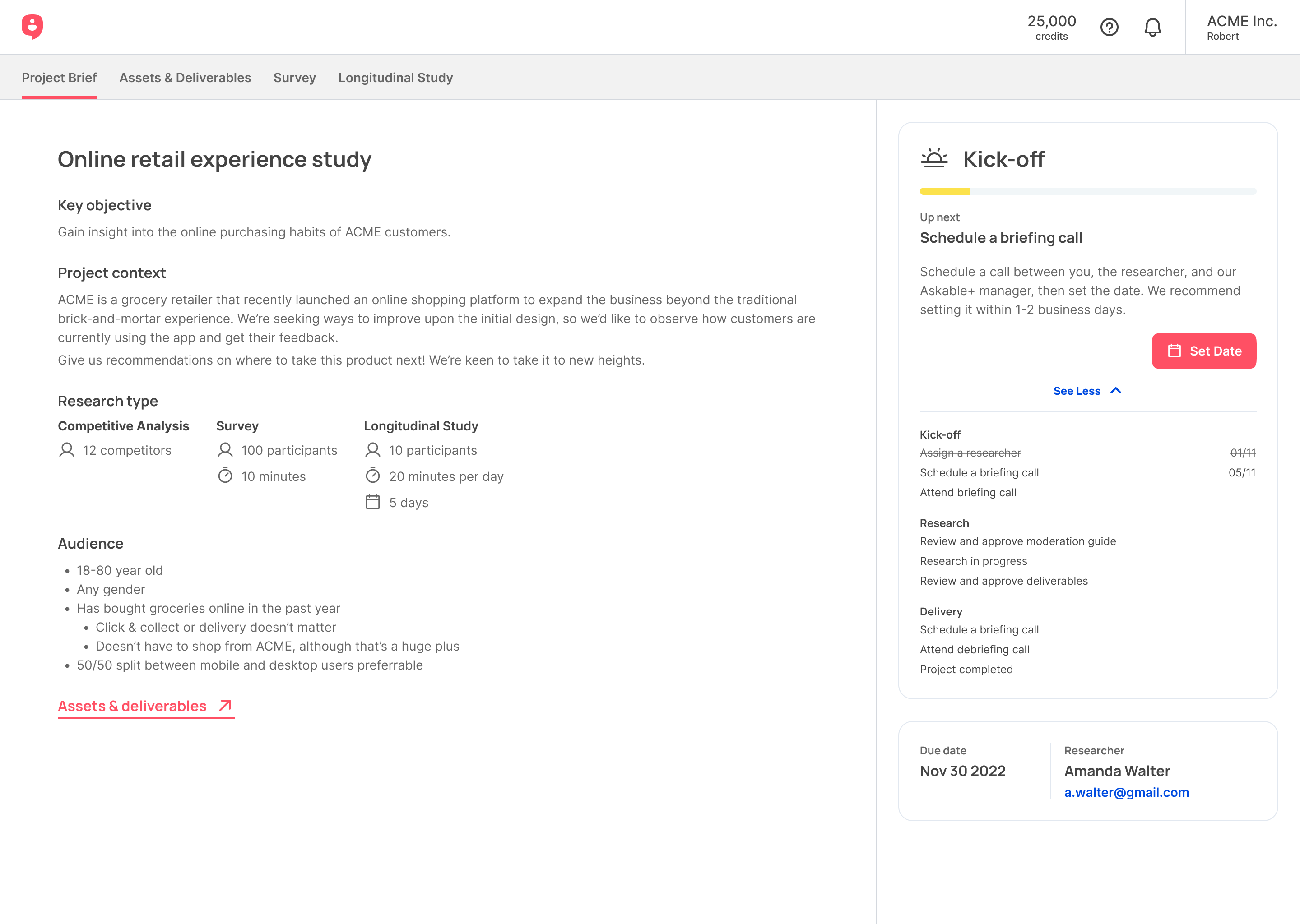
Less manual coordination. The same quality of research.
Askable began as a participant recruitment platform. Askable+ expanded the service by connecting clients with freelance researchers to deliver research projects.
As the sole designer at the service’s inception, I worked with the Askable+ manager to translate processes spread across spreadsheets, Trello, emails, and calls into a product experience. The challenge was to simplify coordination without compromising project clarity or researcher quality.
A service dependent on manual coordination was difficult to scale.
The manager gathered briefs, found researchers, and coordinated each project. Email-based briefs, lengthy certification across multiple platforms, and manager-dependent project alignment created bottlenecks.
The opportunity was not to automate every conversation. It was to distinguish what the product could standardise, what users should control, and where human judgment remained essential.
Understanding the service before designing the screens.
A discovery workshop covered requirements, pricing, and responsibilities. Observing the existing service helped document its lifecycle and handoffs.
| Workflow | Purpose |
|---|---|
| Project creation | Capture the brief, scope, and pricing |
| Project lifecycle | Coordinate work from kickoff to delivery |
| Researcher signup | Assess researchers |
| Project moderation | Assign researchers and oversee work |
What the MVP needed to address
- A structured brief covering objectives, methods, audience, and outputs.
- Clients should describe their needs without planning every execution detail.
- Clear scope supports estimates and fair researcher payment.
- Consistent stages allow repeatable guidance.
- Researcher certification needed fewer long questions, platform switches, and scheduling barriers.
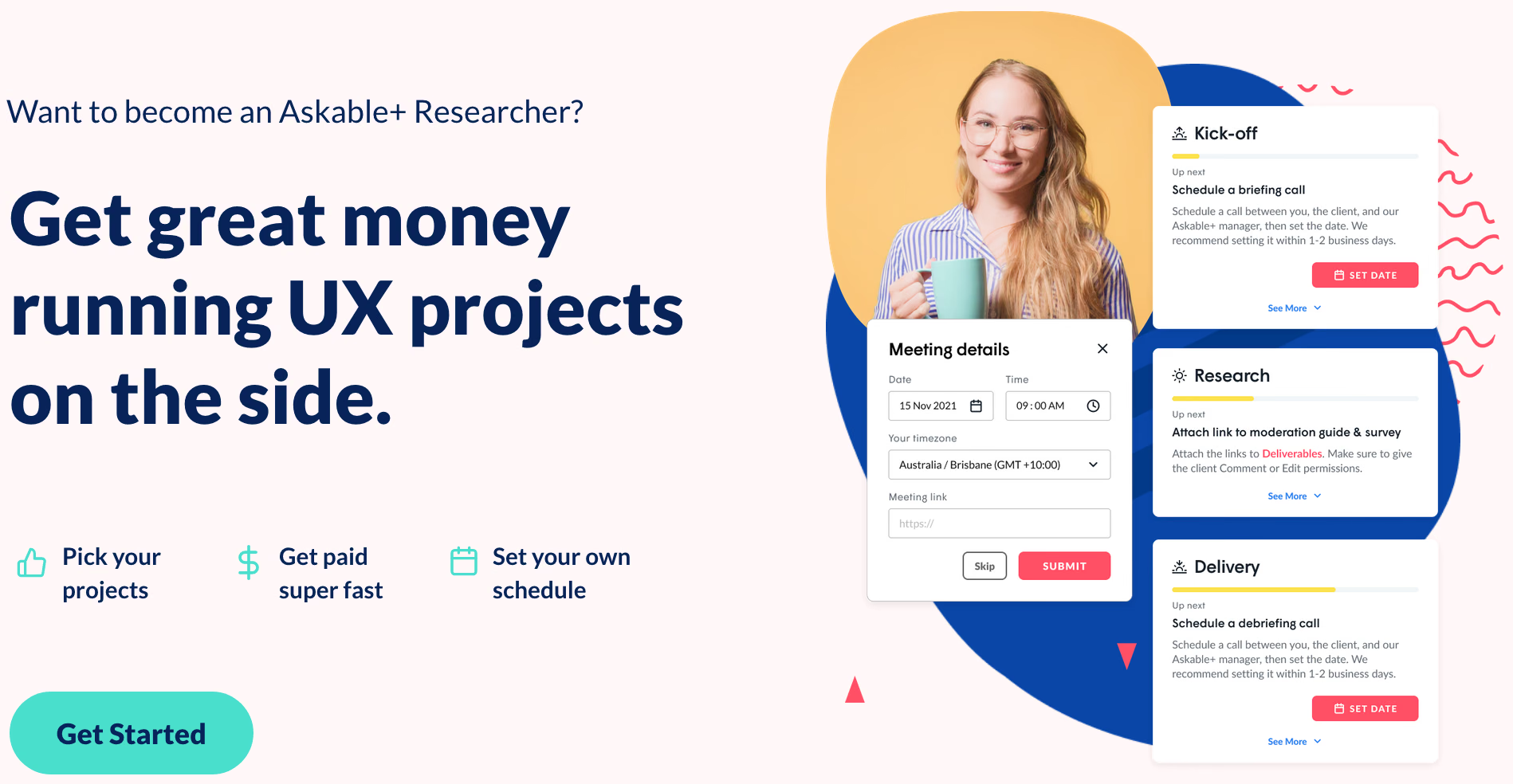
How might we help clients and researchers deliver a research project with less manual coordination?
Preserve clarity, quality, and appropriate oversight while making project creation manageable, progress and next steps visible, and certification simpler without removing assessment.
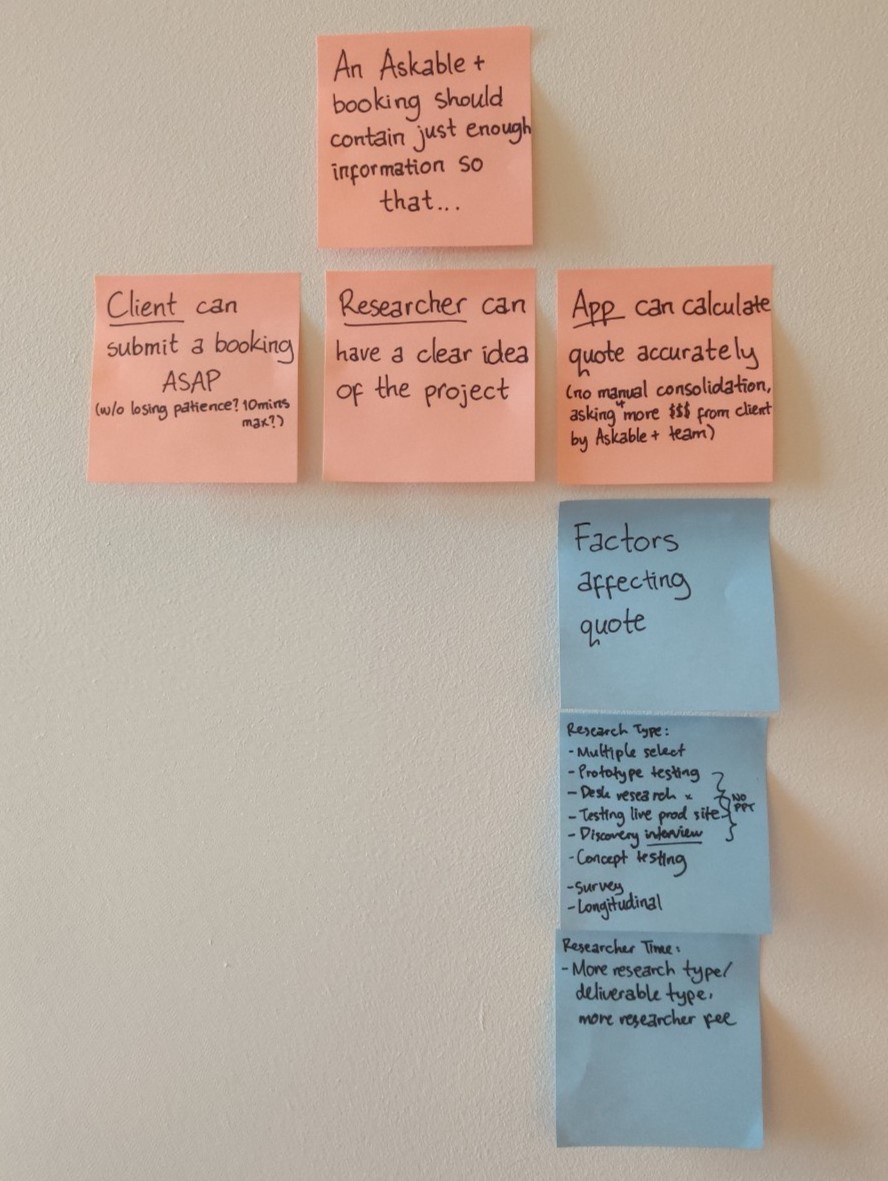
Capture enough information, without asking clients to design the entire study.
Clients specify their needs and audience; researchers plan and execute the research; Askable+ standardises delivery. Defining this division helped determine the essential information to request.
Exploring complexity, then simplifying
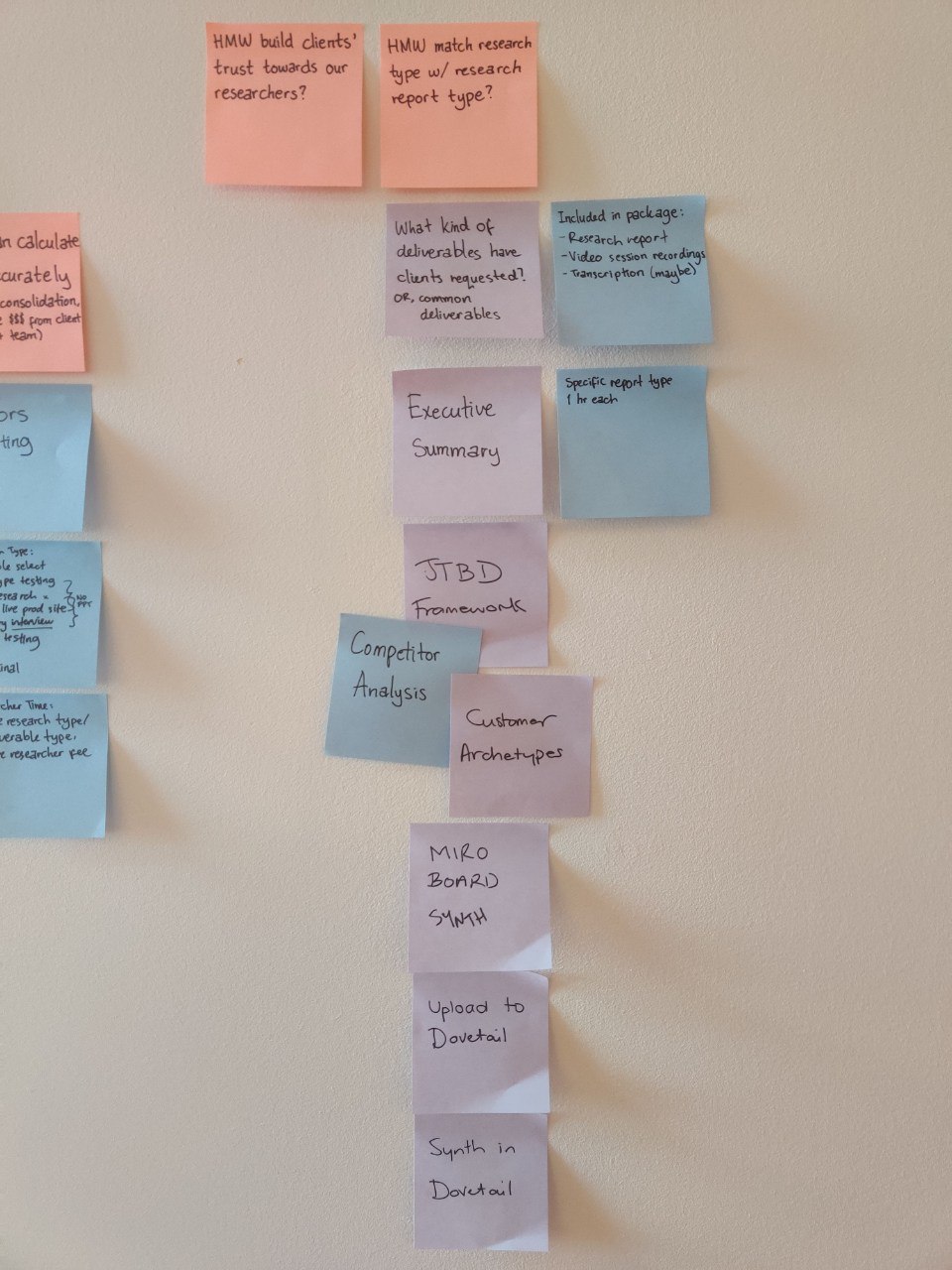
Card sorting organised the form. Early explorations included granular scheduling and customisation, but team review revealed how these choices could return planning work to clients. We simplified the setup around what clients actually needed to decide.
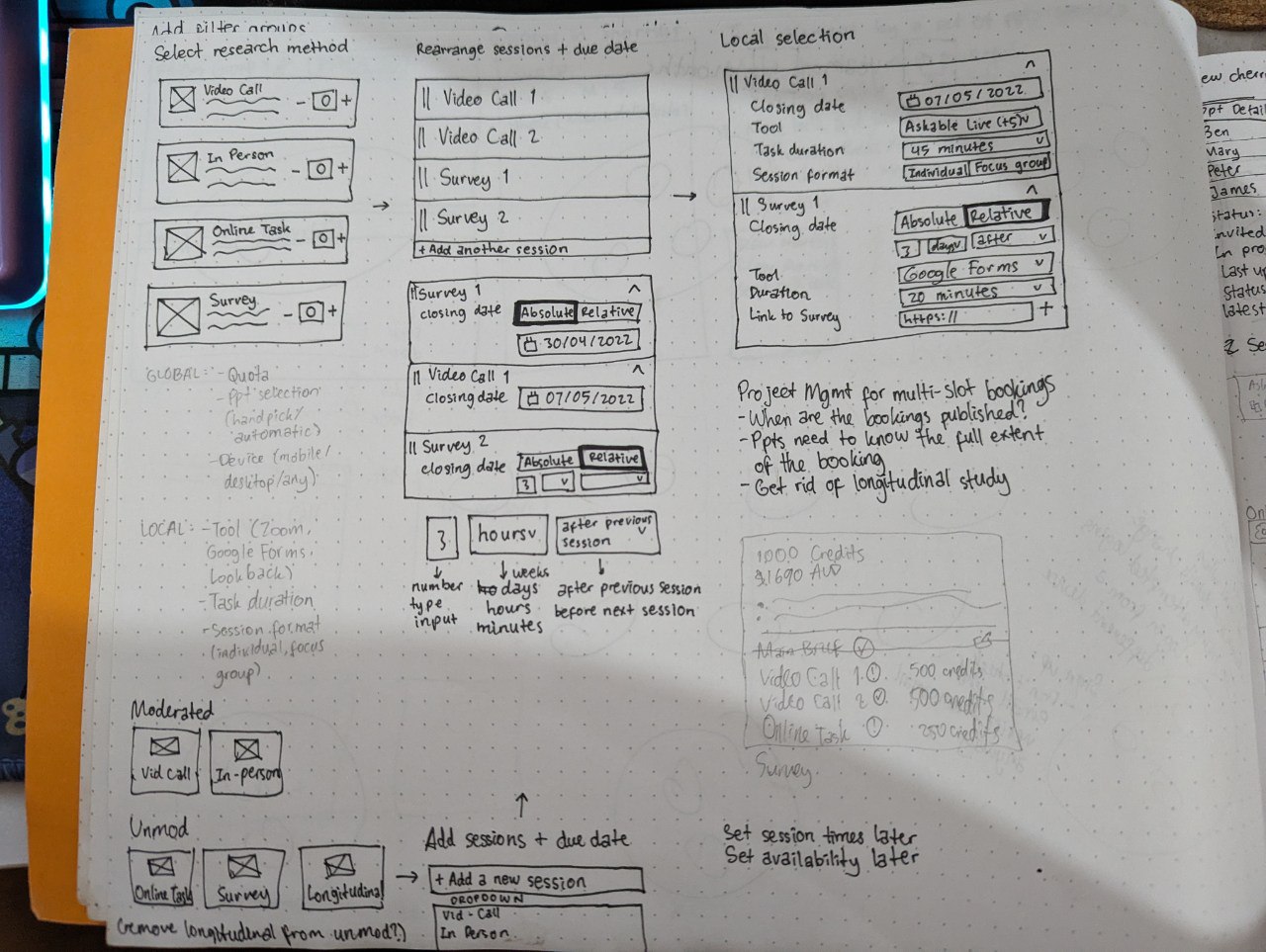
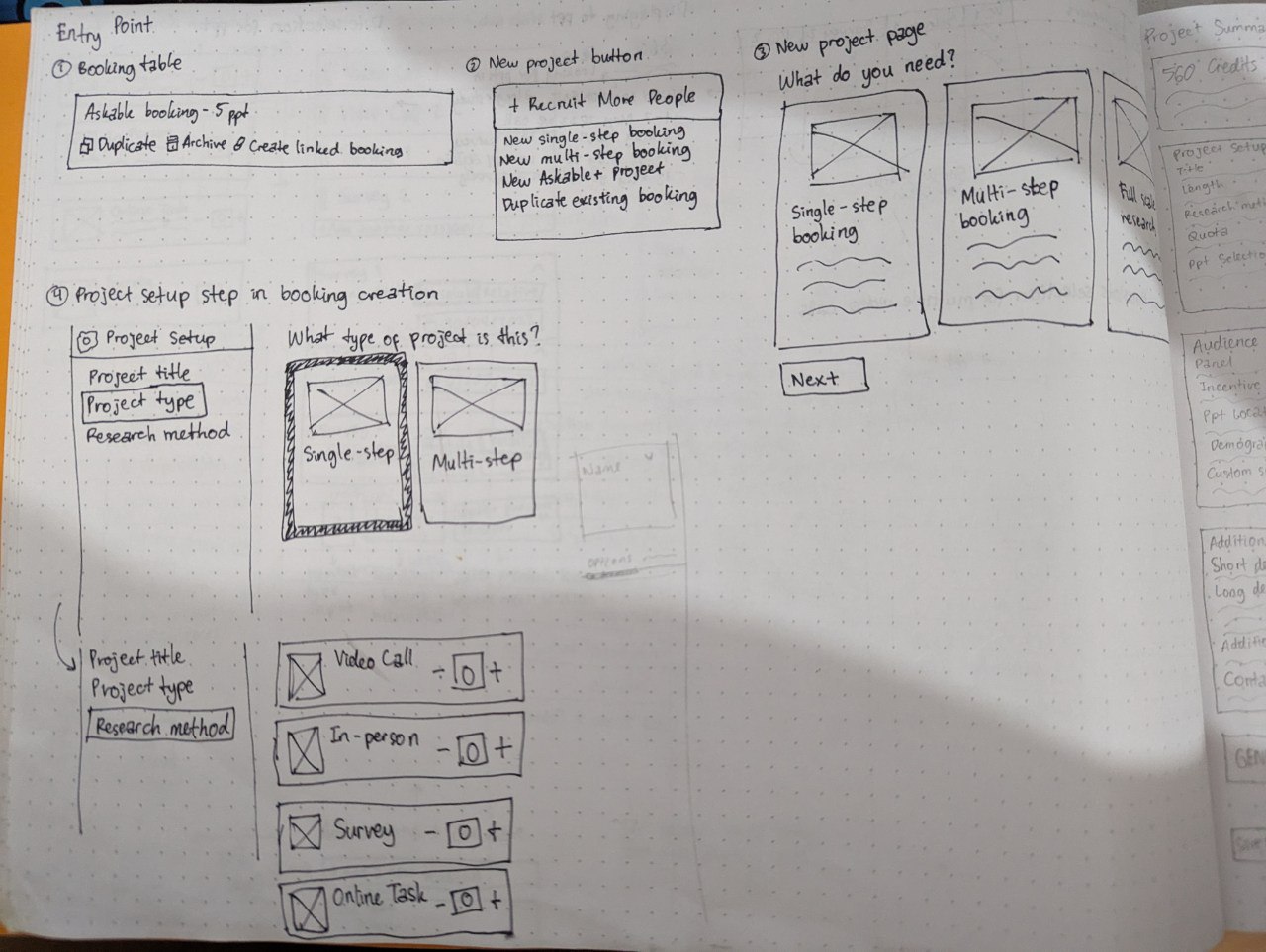
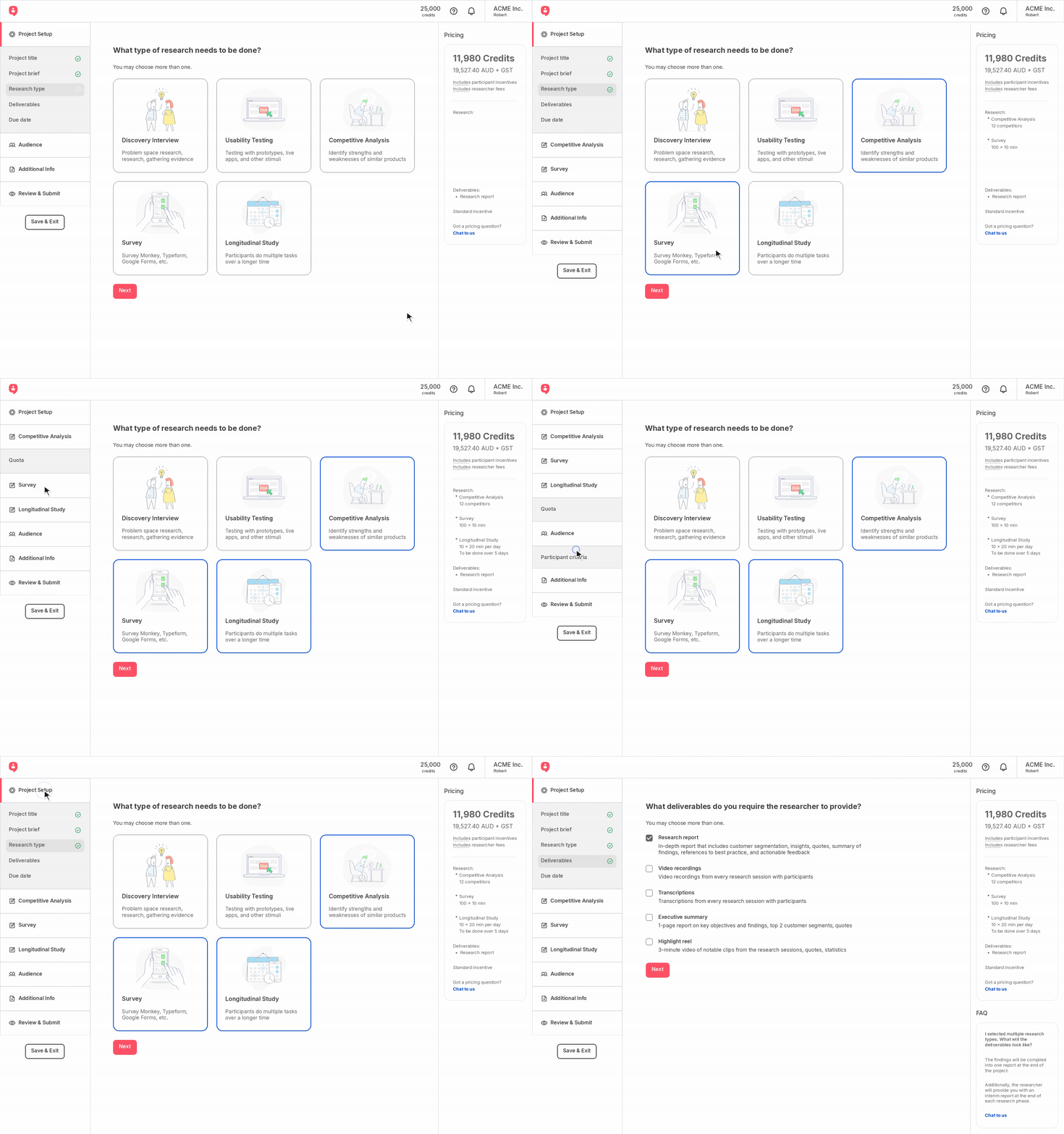
A guided setup, with scope and cost in sight.
The final flow balanced an understandable researcher brief, manageable client setup, and an accurate quote. It asked for the information necessary to establish scope, rather than every detail of research execution.
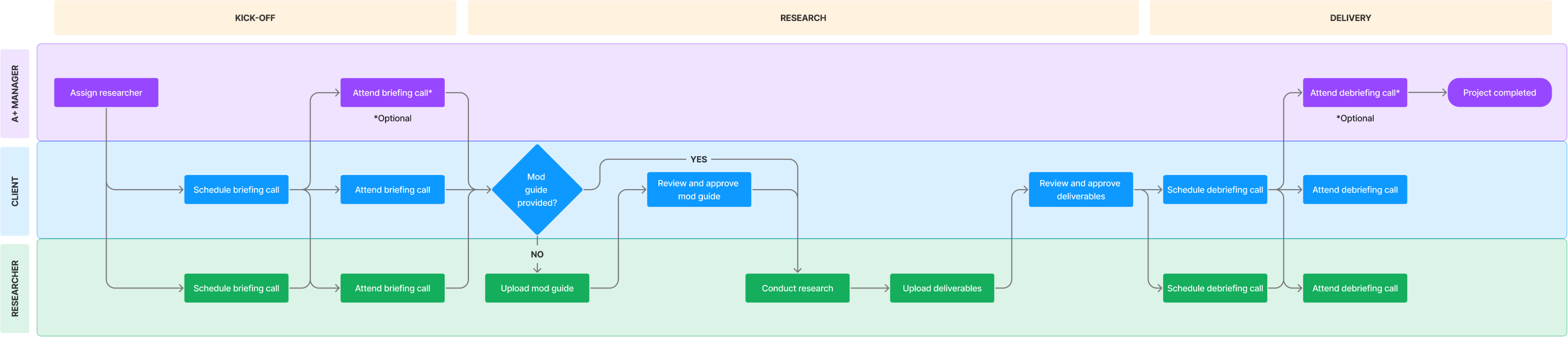
Make the next step clear throughout the project.
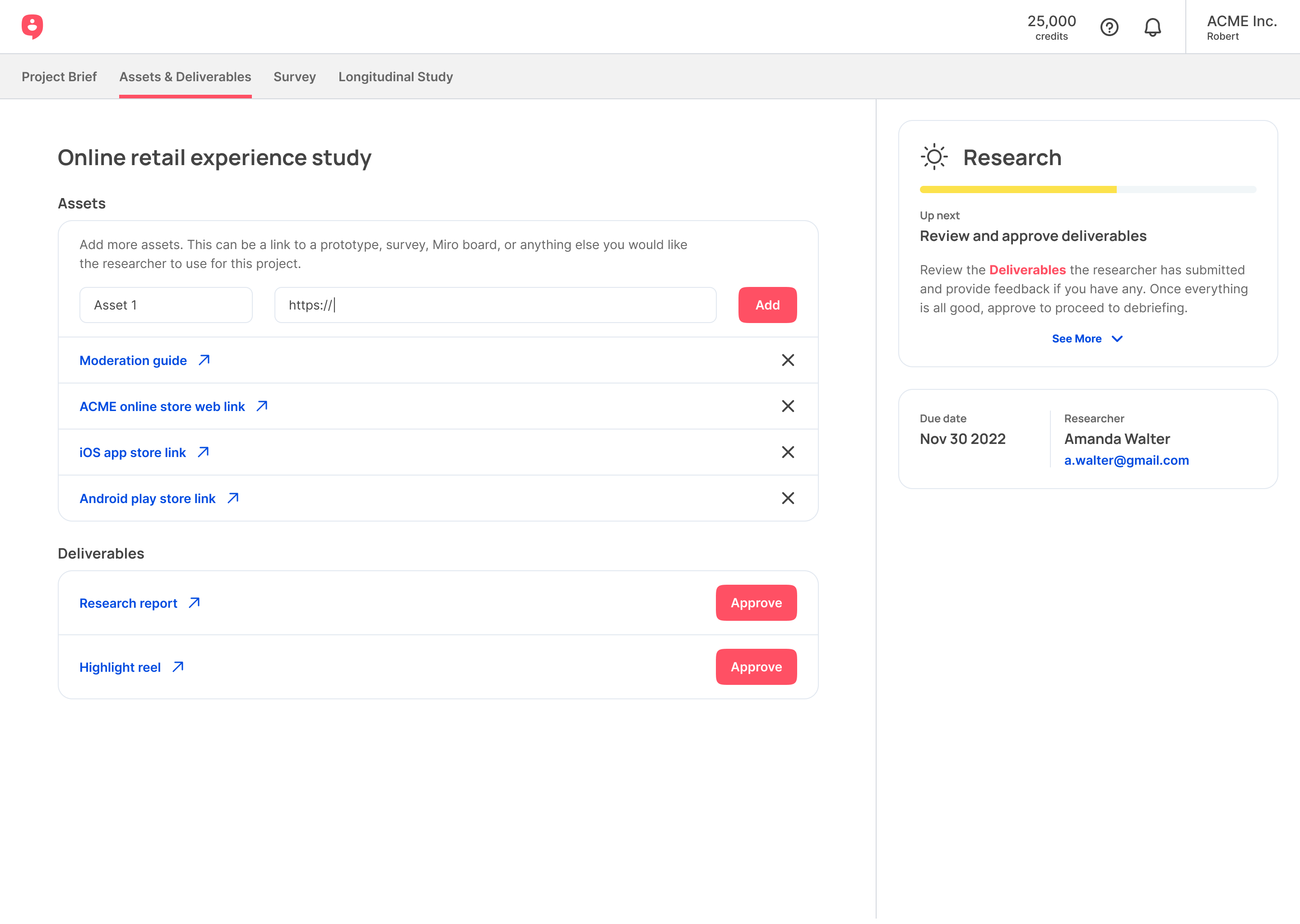
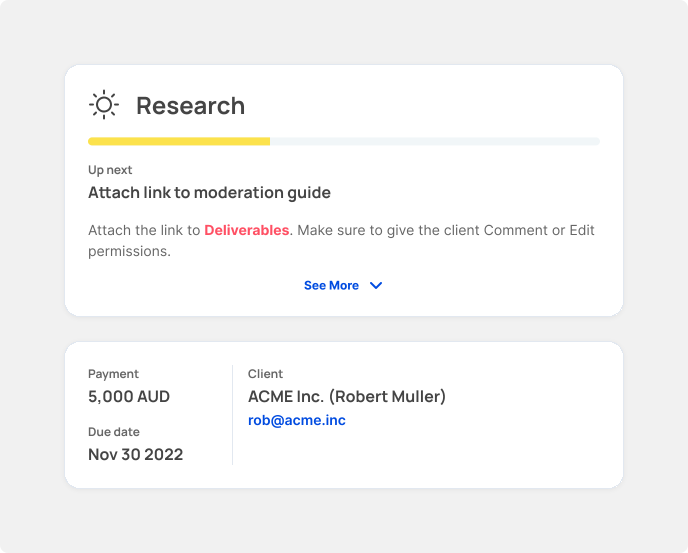
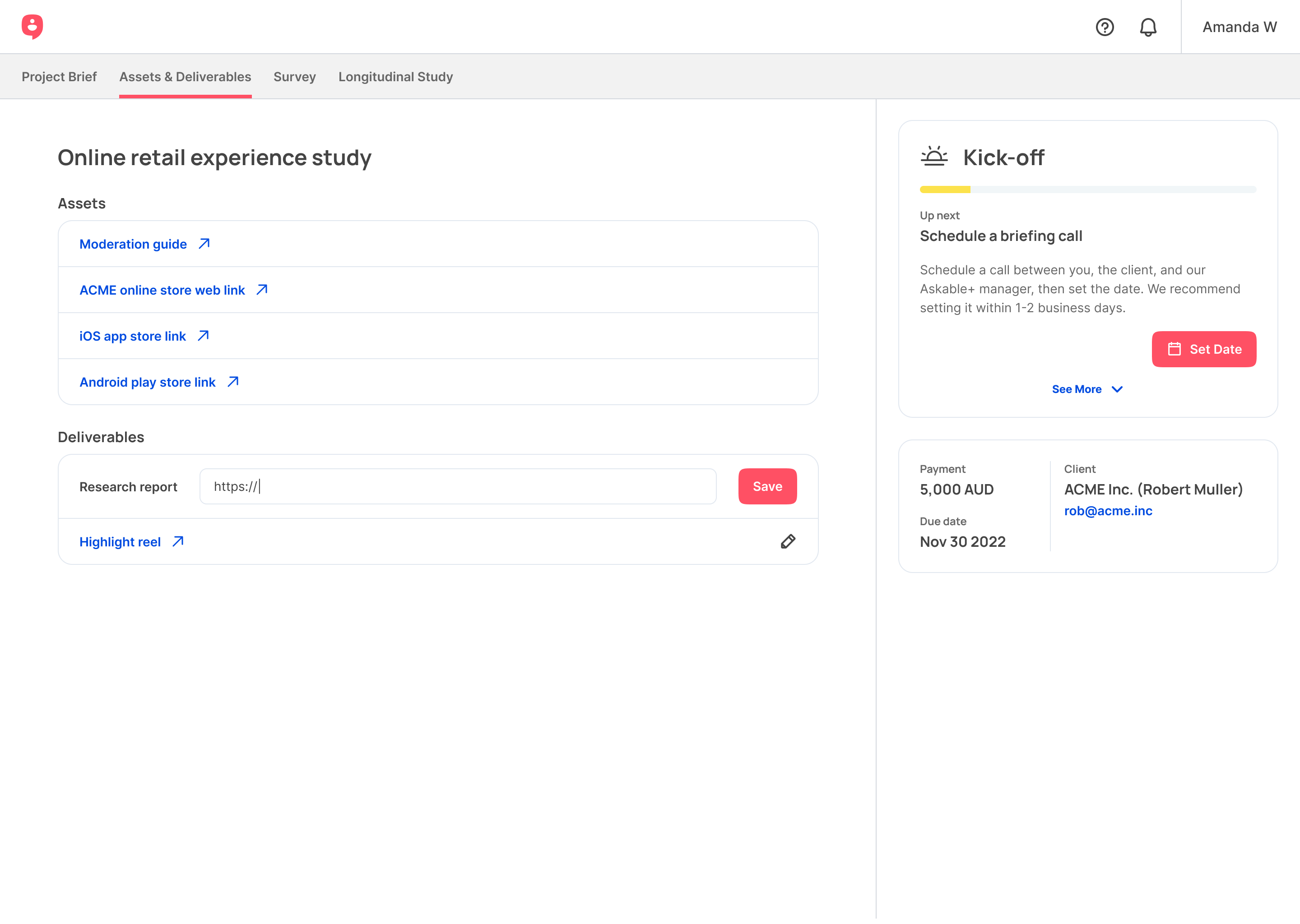
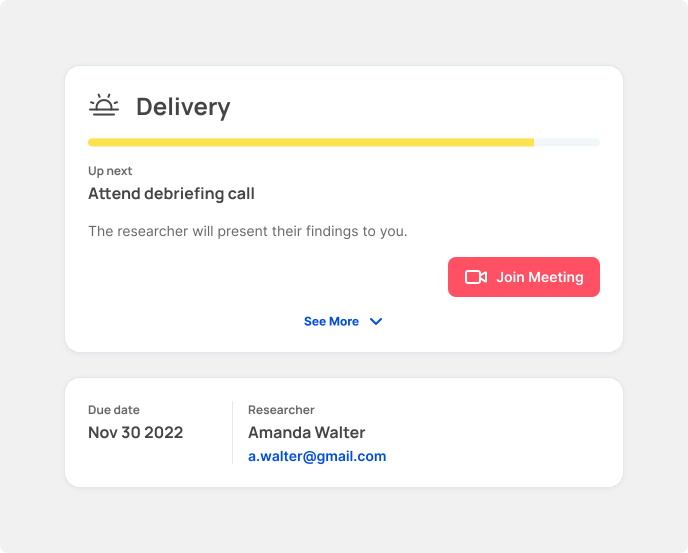
I mapped the lifecycle into Kick-off → Research → Delivery, covering briefing calls, moderation-guide approval, research, deliverable review, and debriefing. Explicit stages made responsibilities and next steps visible.
A shared project workspace.
Briefs, assets, and deliverables lived in one place. Clients could provide links and approve deliverables; researchers could access material and submit their work. Role-specific views shared a consistent structure, while stage guidance made required actions clear.
Remove scheduling friction while retaining quality checks.
Previously, researchers moved from the Askable+ website to email, SurveyMonkey, Calendly, and Google Meet. An approximately 50-question survey took 15–30 minutes, followed by a 30-minute interview plus the wait for a meeting. Certification could take several days and depended on manager availability.
Reduce the questionnaire to essential criteria
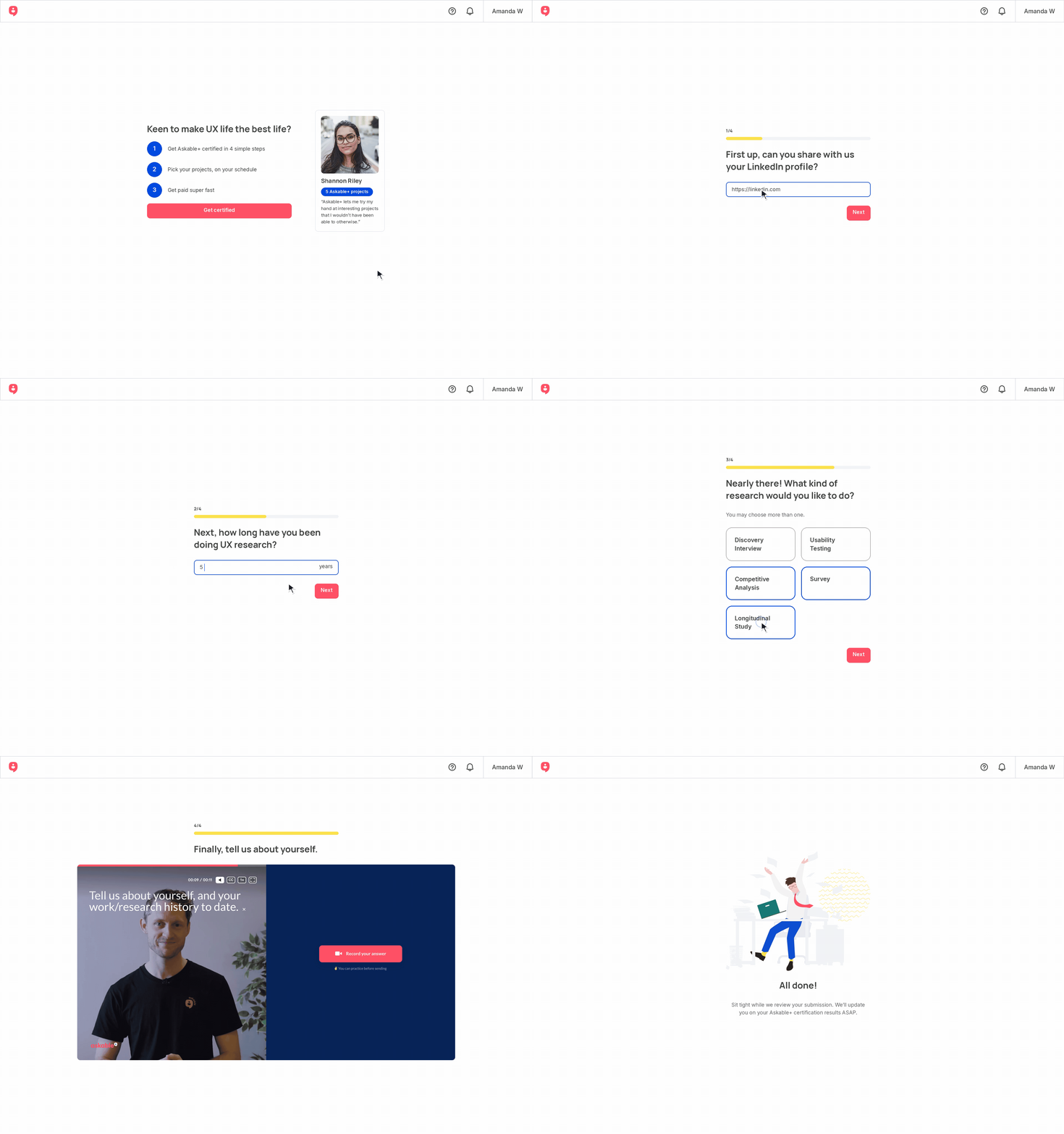
We retained three screening questions: LinkedIn profile for experience and background, years of experience for the minimum requirement, and preferred research methods for project assignment.
Replace live scheduling with asynchronous assessment
Register → Complete 3 screening questions → Record a VideoAsk interview → Receive a decision.
Researchers could record when convenient, and the manager could review independently. VideoAsk stored the responses. Assessment remained; synchronous scheduling did not.
A more scalable service. A clearer product experience.
Faster researcher certification
Certification took 20–30 minutes rather than several days.
A more structured project experience
Consistent briefs, scope and pricing, centralised assets, reviews, and stage guidance replaced fragmented coordination.
Less dependence on synchronous coordination
Asynchronous interviews and explicit project steps reduced scheduling dependencies.
| Reported monthly recurring revenue | Amount |
|---|---|
| Start | $500k |
| Month 3 | $1m |
MRR doubled over three months. This is an endpoint comparison, not a monthly series or evidence of design’s isolated causal effect. Changes in project setup time, conversion, and manager workload were not measured.
Productising a service means deciding what not to ask users to do.
Service responsibilities, requirements, and standards evolved alongside the interface. Too much customisation could return the planning burden to clients. The strongest decisions simplified participation while preserving the information and expert judgment needed for good research.